Nudity Isn't Obscene?! *Gasp*
I’m working on an article exploring a Salt Lake City censorship group from the 1960s and came across something interesting. In a Citizens for Decent Literature (CDL) pamphlet, I stumbled across a largely forgotten little story in censorship history. CDL was founded by Charles Keating who spent decades fighting the scourge of smut and porn in American – until the 1980s when like a good Reaganite he turned to bribing members of Congress and defrauding tens of thousands of Americans. The pamphlet described his hero’s journey of a young lawyer in Cincinnati bent on bringing morality back to a failing America. Seriously, the pamphlet reads like hagiography. But the pamphlet referenced an outrageous 1948 decision in a Cincinnati trial acquitting a newsstand dealer of selling obscene material. I find these kinds of references all the time and it is often hard to track down much but luckily the ACLU archive came through.
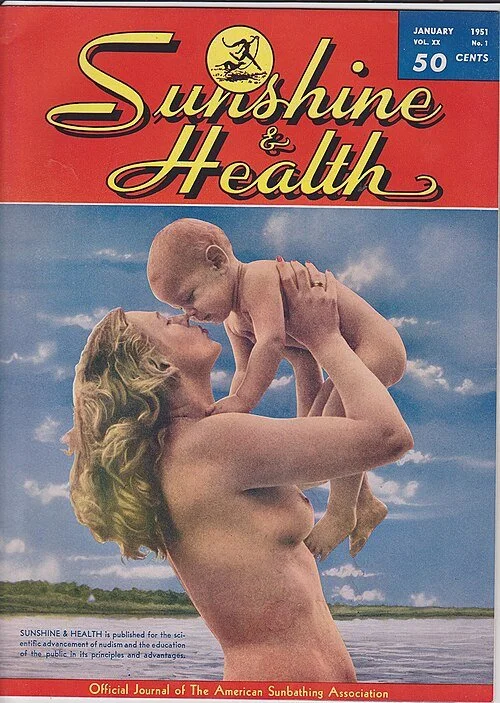
In this case Oscar Learner,* owner and operator of Bell Block News Shop in Cincinnati, was arrested for selling issues of Sunshine and Health (S&H) and a 12 photograph series “Strip Tease Act and Performance.” From news coverage, it appears that he was arrested after a man was arrested for a sex crime and had copies of S&H in his home. This fit a common narrative of the era that exposure to nudity – which folks like Keating treat as porn – causes people to become sex criminals. S&H was the main publication of the American Sunbathing Association.
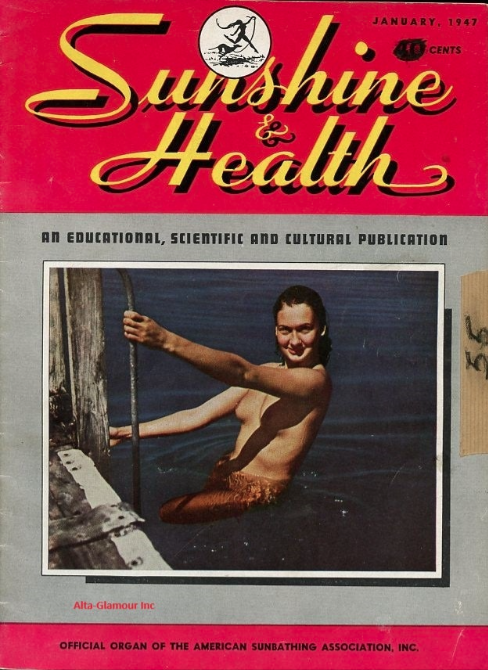
January 1947 cover of Sunshine & Health.
As Brian Hoffman, who literally wrote the book on nudism, explained in an article that I draw upon heavily in this post, American nudists arose in the 1930s and sought to use S&H to spread their philosophy of the health benefits of nudism. As he discussed, the magazine was self-censored in the early years to appease prudes, avoiding genitals and pubic hair. But by the 1940s it regularly just displayed the full naked body. S&H, however, was not really intended as a titillating magazine. The naked people pretty much all seem to be actual nudists doing things one does in nudist camps. Later imitators would pretend to be nudist magazines while shooting models in the nude in more “men’s magazine” poses. But publishing nude pictures in 1940s America was enough to enrage the censors. The strip tease photos are a little less clear. The Cincinnati Post published the below two pictures which I assume was the beginning of the sequence. I assume that these were the first two photos and the later ones just show the woman increasingly nude. It appears these were just loose images and not a bound book – I’ve found many similar things from the 1960s sold as art books instructing in the various poses for new artists to draw. Variations on these kinds of photos were often sold at the time but rarely do they end up in the litigation record because they were harder to defend as legitimate artistic expression.
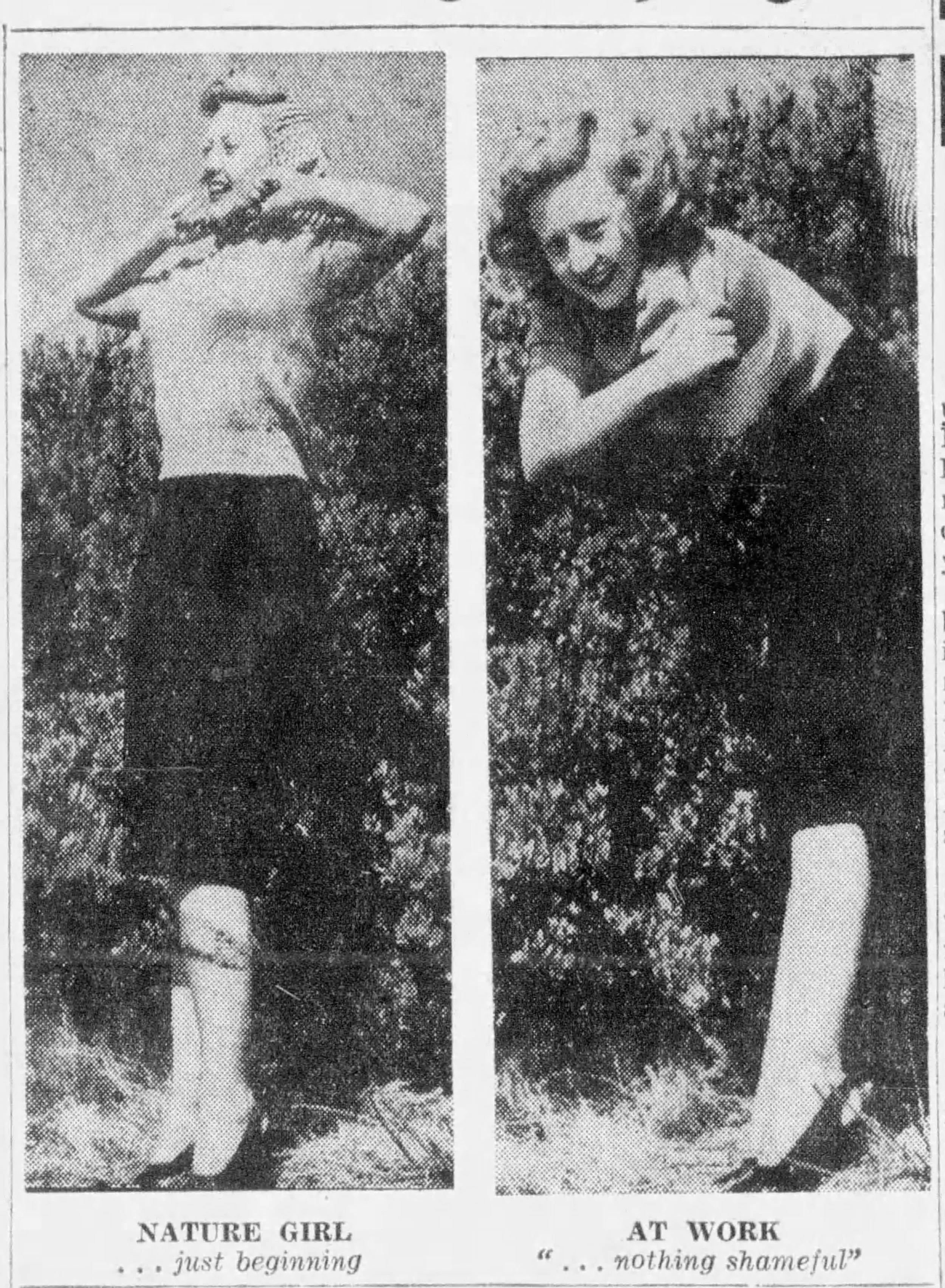
The Cincinnati Post front page, 11 June 1948.
In Learner, Judge Stanley Struble, an 82 year old judge at the end of his tenure, declared that nudity was not obscene. His exploration of obscenity law is a little oddly structured but the gist of it is that obscenity requires consideration of the whole book (or other item) rather than just isolated images. While once obscenity law had been looser and allowed punishment more broadly, Struble argued that courts had performed “a great service for mankind through the years in lifting this sex taboo from the arts, letters and sciences, and in limiting the scope of these statutes to … literary work that tends to ‘arouse impure sex ideas in minds susceptible of such ideas.’” After all, “[p]ure, normal sex ideas are all right. All of mankind have sex ideas. … Sex is the why and wherefore of life and living.” While the idea of separating “pure” from “impure” sex thoughts is absurd, for 1948 this degree of sexual liberalism in a court was unusual. It anticipated Justice Brennan’s famous declaration that “sex and obscenity are not synonymous” by nearly a decade.
Struble’s discussion of obscenity is a favorite of mine. “‘Obscenity’ is not a legal term. It cannot be defined so that it will mean the same to all people all the time, everywhere. ‘Obscenity’ is very much a figment of the imagination, - an undefinable something in the minds of some and not in the minds of others; and it is not the same in the minds of the people of every clime and country, nor the same today that it was yesterday or will be tomorrow.” This is one of the most honest judicial assessments of obscenity law. It is solely in the eye of the beholder, “I know it when I see it” as Justice Potter Stewart famously declared. But the law is still there and he had to apply it by adopting the emerging “modern” approach: the dominant theme of the work as a whole had to cause impure sexual thoughts. SCOTUS, in Roth v. United States (1957) would embed a version of this explicitly in First Amendment law but courts had been coalescing around this basic idea for decades.
In examining the materials, Struble stressed that S&H was primarily prose about nudism with only about 15-18% of the magazine showing nude images. While the photos included men, women, and children and “some … give a front view and exhibits the pubes area and genitals,” all of the images are of “innocent activities and there is not any emphasis on sex of any kind.” In essence, the state argued that nudity was inherently obscene and Struble could not go so far. Of course, these images could bring sex to the mind, so can images of fully clothed people. Nudity is a component of art and life and these pictures “merely show humankind as God made them … These front views, as well as the other views, are of God's own children as he made them in his own image. There cannot be any obscenity in God's own handiwork.”
I can’t stress enough how unusual this argument was at the time. Fights over nudist magazines were heating up and for courts that found them protected decisions turned on the prose and broader content of the magazine. S&H may have a bit of risqué content, but it was primarily about presenting arguments over the benefits and value of nudism. Thus, it couldn’t be deemed obscene based on the dominant theme. Struble threw that element in but also concluded that the pictures on their own were totally fine regardless. He applied this to the strip tease photos which had no prose or anything else to broaden the meaning. They were literally just a woman disrobing. Struble presents this as related to the history of burlesque dancing and that it is a natural act, disrobing, done to satisfy the curiosity of others. Struble emphasized how the woman was clean and wholesome in presentation: “This young woman is neatly appareled and she has a nice face and form, and her poses are graceful and her manner playful. We must not misjudge this photographic presentation of a young woman disrobing by reading into it what this young woman did not intend.” In other words, lustful men will see lust when they look at anything and we can’t judge obscenity based on that.
Struble’s decision is a fascinating one to me. For a judge to defend nudity, even without prose attached, in 1948 was unusual to the point of potentially being unique. Perhaps this represented the freedom of pending retirement, the opportunity to speak some hard truths without worrying about the voters at the next election. The 1940s and ‘50s saw a few of these lower court judges critiquing the very idea of obscenity law. The far more famous examples come from Philadelphia and New Jersey, culminating in the classic attack by Second Circuit Judge Jerome Frank. While Struble might not write as well as these other judges, his opinion is a fascinating addition to this dissenting canon and demonstrated an alternative path where SCOTUS declared obscenity to be a concept lacking in logic, clarity, and constitutionality. Obviously we didn’t get that but I always like to dream.
*I’ve provided the ACLU archival file of the opinion but this decision was reported. State v. Lerner, 81 N.E.2d 282 (Ohio Ct. Common Pleas, Hamilton County, 1948).